


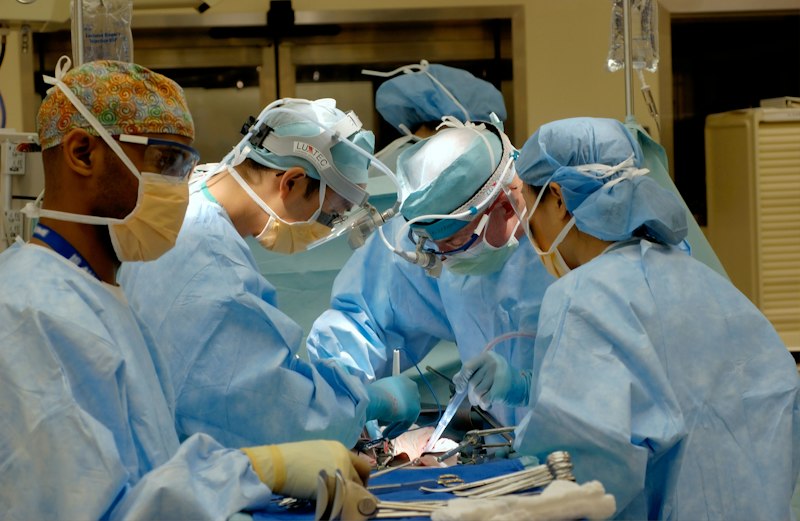
In surgery, sharpness isn't a luxury — it's a patient safety requirement. A sharp instrument cuts cleanly through tissue with minimal force, reducing trauma, promoting faster healing, and giving the surgeon precise control. A dull instrument tears, crushes, and damages tissue in ways that increase complications and extend recovery time.
Why Instruments Lose Their Edge
Every time a cutting instrument is used, microscopic amounts of metal are removed from or deformed along the cutting edge. Sterilization cycles, particularly the high temperatures and pressures of autoclaving, further stress the metal. Chemical exposure during reprocessing can cause surface changes that accelerate edge deterioration. Over dozens of uses and sterilization cycles, even the finest surgical steel loses its precision edge.
What Professional Sharpening Achieves
Professional surgical instrument sharpening does far more than make an instrument sharp. It restores the original blade geometry — the precise angles, curves, and profiles that the manufacturer engineered for optimal performance. This includes the primary bevel angle, the micro-bevel at the cutting edge, and the relationship between the two blade halves.
A properly sharpened surgical scissor doesn't just cut — it cuts exactly as it was designed to, with the right amount of shear, the right blade contact pattern, and the right feel in the surgeon's hand.
Why Professional Service Matters
Surgical instrument sharpening requires specialized equipment, training, and experience. Different instruments require different techniques — the approach for Mayo scissors is quite different from Metzenbaum scissors, which is different again from iris scissors. Bone-cutting instruments like rongeurs and osteotomes have their own unique requirements.
Professional sharpening services use precision grinding equipment calibrated for surgical instruments, not general-purpose tools. They test every instrument after sharpening using standardized materials to verify performance meets specifications.
The ROI of Sharpening
Professional sharpening typically costs $8-25 per instrument, depending on type and condition. A quality scissor that costs $150-300 can be sharpened 10-15 times before the blades reach end-of-life dimensions. That's $150-375 in sharpening costs versus $1,500-4,500 in replacement costs for the same operational lifetime.
Keep your surgical instruments performing at their best. Contact ROI Surgical for professional sharpening services with fast turnaround and guaranteed results.
Need Help with Your Surgical Instruments?
ROI Surgical offers professional sharpening, repair, and maintenance services with fast turnaround. Contact our expert team today.
Ready to Work with ROI Surgical?
Whether you need instrument sharpening, repair, maintenance, or want to buy/sell equipment, our team is here to help. Contact us today for a free consultation.
Larry Razzano
Larry Razzano is the founder and owner of ROI Surgical Com LLC, a Florida-based marketplace and service provider for refurbished surgical equipment. He connects surgical centers with vetted instrument suppliers and provides repair, sharpening, and lifecycle management services that extend instrument life and reduce facility costs.

